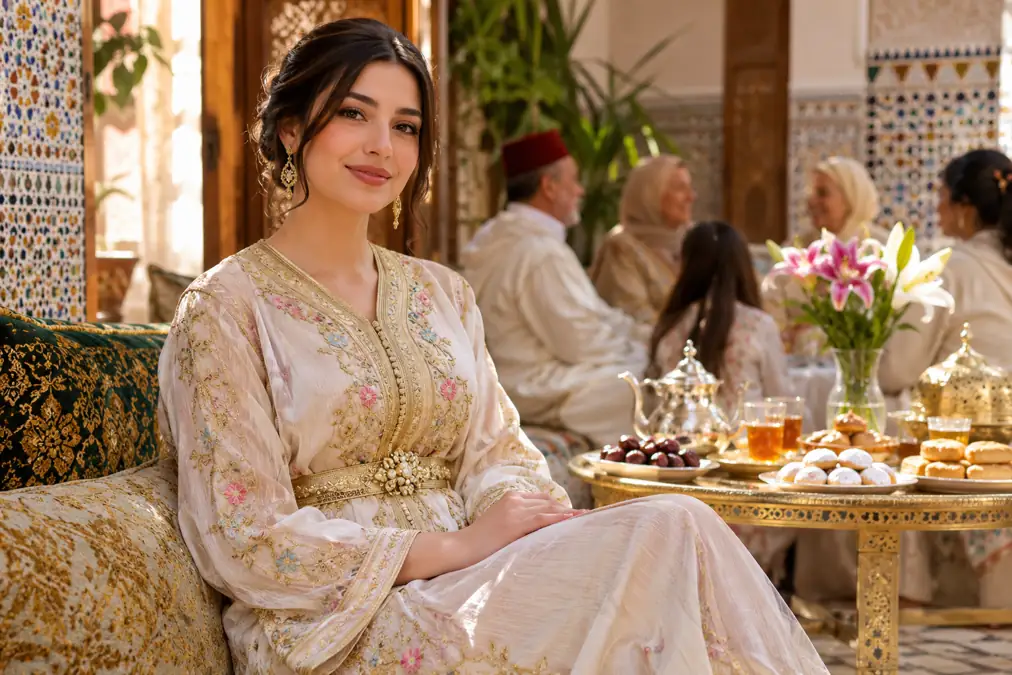
Eid clothing needs to do more than look beautiful for one photograph. The day can include prayer, breakfast, family visits, hosting, travel and long hours of conversation.
A Moroccan caftan works especially well when its fabric, length and decoration are chosen for the rhythm of the day rather than for formality alone.
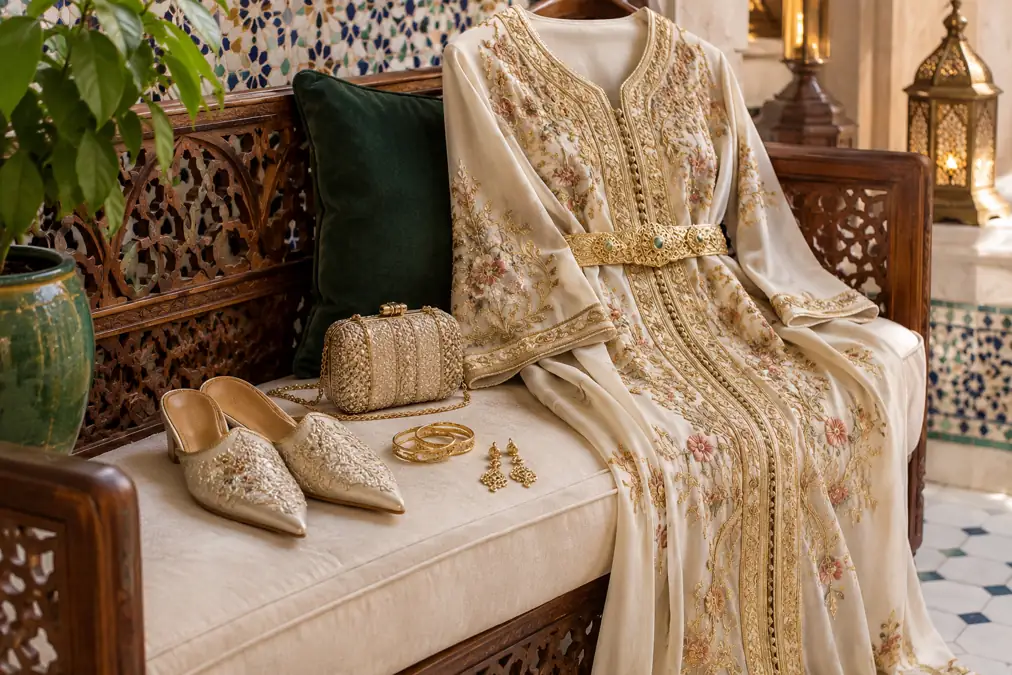
Map your Eid day before choosing
If you will move between several homes, prioritize a caftan that travels well and does not require constant adjustment. If you are hosting, sleeves and embellishment should allow you to serve and sit comfortably.
A single formal gathering gives you more freedom to choose a structured garment. A full day of movement rewards lighter construction.
Choose a fresh level of formality
Eid invites polish, but it does not always require wedding-level ornament. Clean sfifa, precise aakad and one area of embroidery can feel festive without making the garment heavy.
For an evening family dinner, richer colour or metallic accents can raise the level of ceremony while keeping the cut comfortable.
Colours that work through the day
Ivory, soft blue, mint, blush and warm neutrals reflect morning light beautifully. Rich green, plum and navy transition easily into evening.
Consider practical care as well. Very pale hems can show marks during a busy day, especially if you will visit several locations.
Comfort around the neckline and sleeves
A neckline that sits securely helps during movement and greetings. Sleeves should allow easy use of the hands without trailing into food or tea.
Wide sleeves can still be practical when their length and opening are controlled. Try common movements before deciding.
Shoes and hem length
Eid often involves more walking than expected. Select shoes first enough to confirm the final caftan length. A hem that barely clears the floor indoors may catch outdoors.
A stable low heel, elegant flat or supportive block heel can look refined when coordinated with the caftan. Comfort is part of good styling, not a compromise.
Jewelry for family settings
Choose pieces that can remain comfortable for hours. If the caftan has an embroidered neckline, earrings or a bracelet may be enough.
Avoid accessories that repeatedly catch on sleeve embroidery. Test clasps and sharp edges against the fabric at home.
A practical hosting approach
For hosting, choose decoration that is secure and sleeves that stay clear during serving. Keep a clean shawl or light outer layer nearby if guests will also gather outdoors.
Prepare a small care kit with a clean cloth, safety pins and the lipstick or powder you plan to use. The goal is reassurance, not constant maintenance.
Rewearing a beloved caftan
Eid is a good occasion to restyle a caftan already in your wardrobe. Change the belt, earrings, bag or hairstyle rather than assuming every celebration requires a new garment.
Inspect it early, air it and follow the care guidance in our caftan care guide before the day arrives.
A caftan that follows the day
The strongest Eid outfit feels festive at breakfast and still comfortable during the final visit. Choose for movement, temperature and real plans first; then refine colour and accessories.
That balance allows the caftan to support the celebration instead of becoming another task to manage.