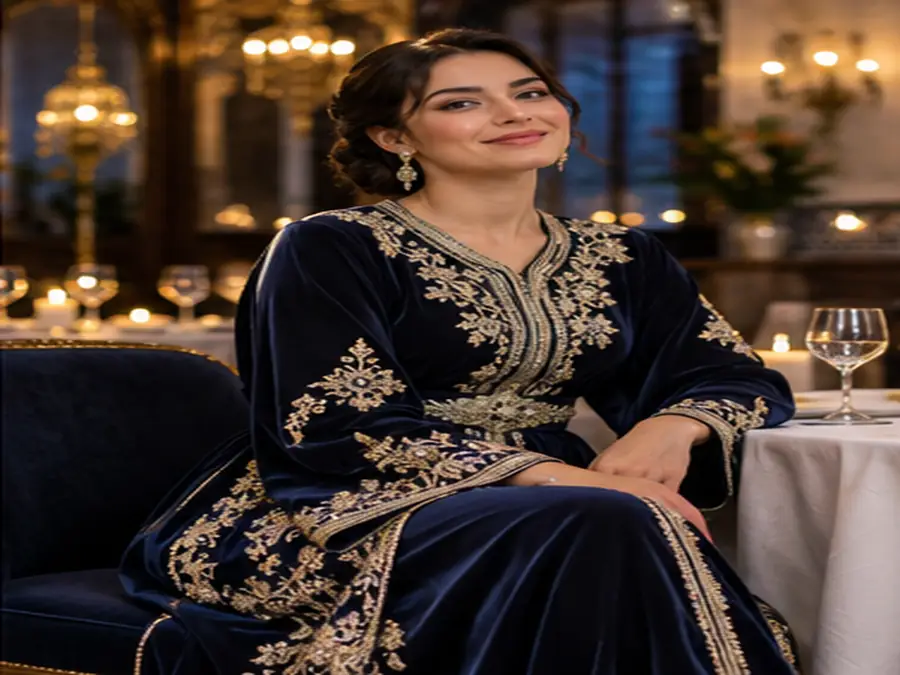
A formal dinner asks for presence without the scale of a wedding outfit. The caftan should register as elegant when you enter the room, then remain comfortable while seated for a long meal.
Evening styling is often strongest when it relies on controlled contrast: a deep colour, precise embroidery, a strong belt or an excellent fabric rather than all four competing at once.
Study the invitation and venue
A diplomatic dinner, luxury restaurant and private celebration can all be formal, but their atmosphere differs. Look for dress-code language, location and whether the evening includes a reception before dinner.
A restrained caftan can be more appropriate in a quiet dining room than a design created for a large ballroom.
Use evening light deliberately
Navy, black, aubergine, forest green and burgundy gain depth under warm light. Metallic thread can define the garment, but highly reflective surfaces may appear brighter in photographs than expected.
View the caftan under indoor light before the event. Daylight alone does not reveal how satin, sequins or metallic embroidery will behave.
Build a clean silhouette
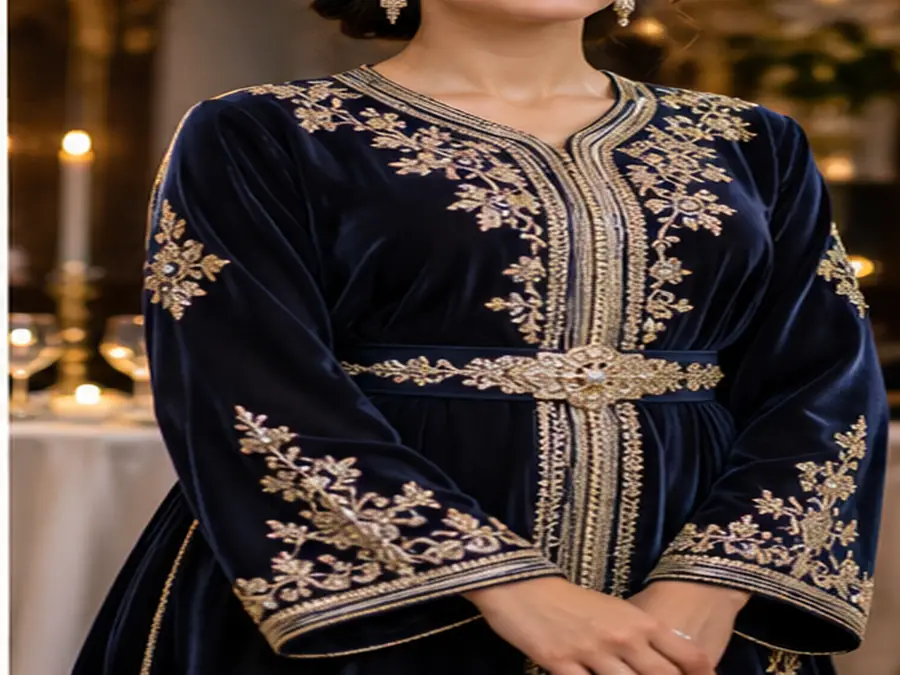
A balanced shoulder line and well-placed belt create form without making the garment tight. Vertical sfifa or embroidery can lengthen the appearance and guide the eye.
For seated comfort, confirm that the belt does not press sharply and that the skirt has enough ease. Sit for at least ten minutes during the fitting.
Choose detail for close viewing
At dinner, people see the garment from relatively close range. Fine workmanship and balanced detail matter more than oversized motifs designed for a distant stage.
Pay particular attention to the neckline, cuffs and front panel, which remain visible while seated.
Manage sleeves at the table
Wide sleeves are elegant but need the right length. They should not fall into plates, glasses or serving dishes when you reach forward.
Practice normal dining movements at home. If needed, a tailor can sometimes adjust width or length while preserving the decorative border.
Use accessories with restraint
A statement earring can work beautifully with a clean neckline. If embroidery already frames the face, smaller jewelry keeps attention on the caftan.
A compact structured bag is usually more practical than a soft bag that rubs against beadwork. Avoid chains that snag delicate sleeves.
Shoes still affect the outfit
Shoes determine posture, comfort and hem clearance even when mostly hidden. Select a heel height you can manage through arrival, standing conversation and departure.
Coordinate tone rather than searching for an exact colour match. Metallic, neutral or deep complementary colours often look more deliberate than nearly matching shades.
Prepare for temperature changes
Restaurants and event spaces can feel cool even in warm seasons. Consider whether a light wrap can be worn without crushing embroidery or fighting the neckline.
For velvet or heavily lined caftans, check whether the venue may be warm. Fabric weight should serve the evening, not only the photograph.
Final Thoughts
A formal-dinner caftan succeeds when every decision looks intentional: one strong visual idea, polished finishing and comfort that lasts through the meal.
Choose the garment you can wear naturally. Ease and posture often communicate more elegance than additional ornament.