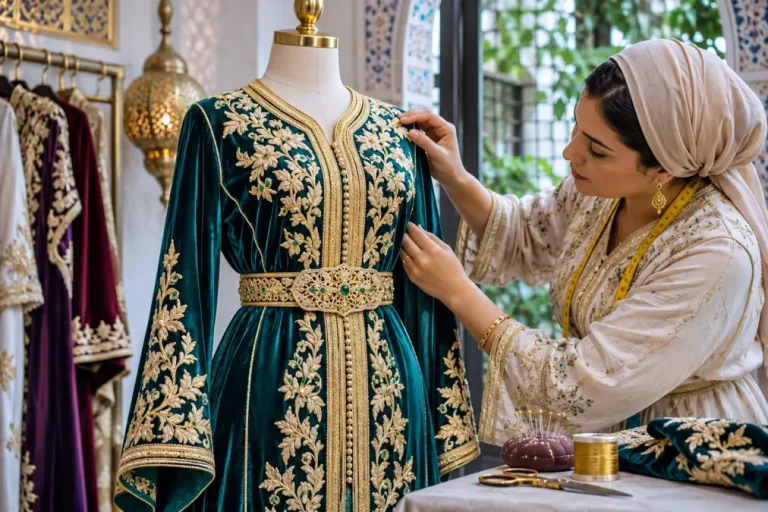
How to Recognize a Well-Made Moroccan Caftan
A practical quality checklist for evaluating Moroccan caftan fabric, cut, embroidery, closures, lining and product information.
Read the article →Understand the materials, construction and decorative details that give a Moroccan caftan its character. This section helps you look closely at a garment, ask informed questions and distinguish visual ornament from the way a piece is actually made.
A practical quality checklist for evaluating Moroccan caftan fabric, cut, embroidery, closures, lining and product information.
Read the article →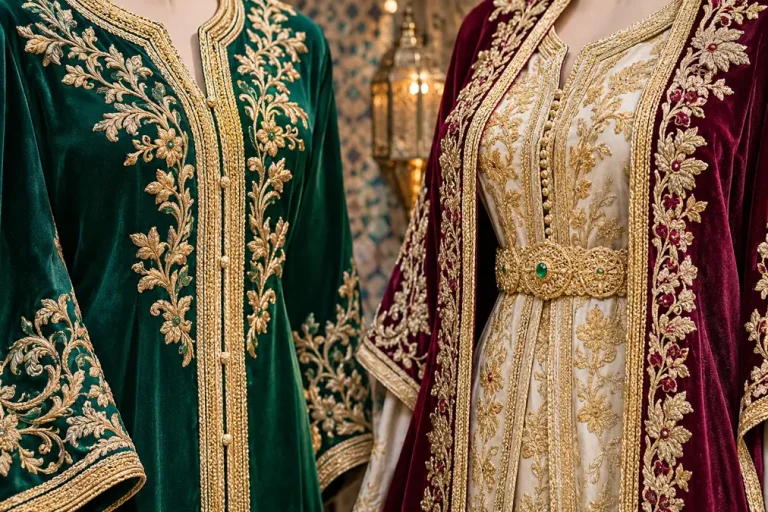
Learn what sfifa, aakad and tarz mean, where they appear on a Moroccan caftan and how to assess their balance and finish.
Read the article →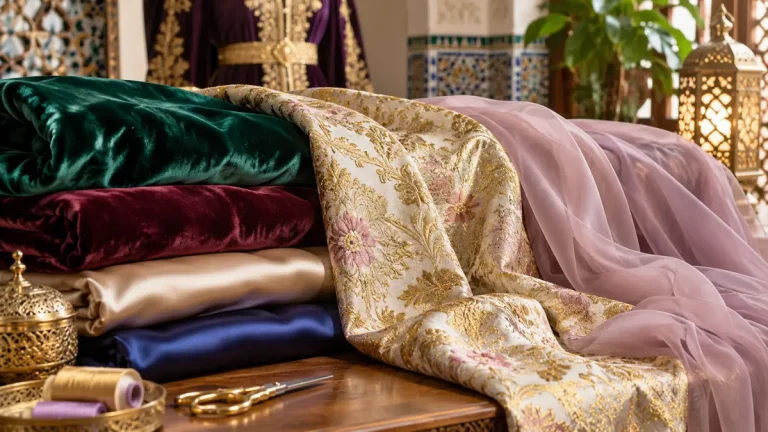
Compare velvet, satin, silk blends, brocade, chiffon and other caftan fabrics by drape, comfort, season and decoration.
Read the article →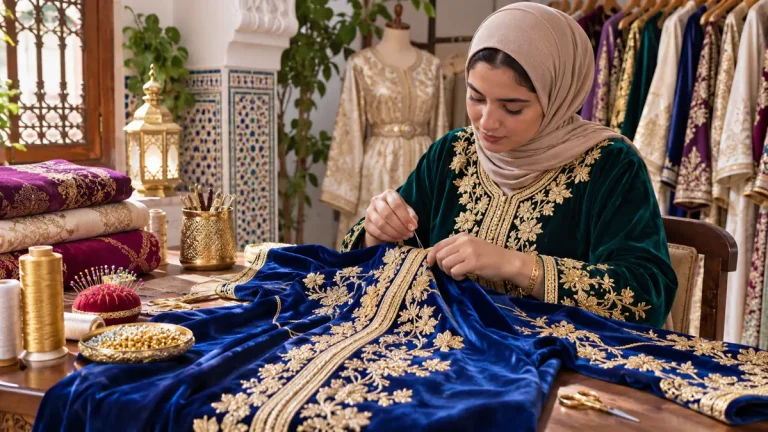
Follow the making of a Moroccan caftan from design and fabric selection through cutting, sfifa, embroidery, fitting and finishing.
Read the article →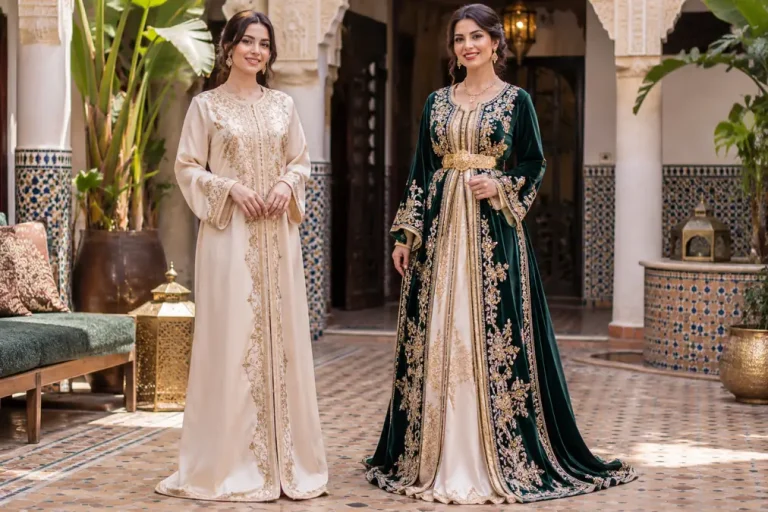
Understand the practical differences between a Moroccan caftan and a takchita, from construction and layers to styling and occasion.
Read the article →Begin with its overall construction: the number of layers, the opening, the neckline and the way the sleeves join the body. A single photograph may conceal an inner dress or a separate outer layer. Check the product description alongside several views. The terms caftan and takchita are sometimes used loosely in listings, so the included pieces matter more than a label alone.
Fabric creates the base, drape and weight. Sfifa frames edges and openings, aakad refers to decorative knotted button details, and embroidery adds motifs and texture. These elements need to work together. Dense decoration can change how a light fabric hangs, while a stiff border may affect the way a neckline rests. Ask about fibre composition, lining and the weight of the finished garment rather than treating a fabric name as a complete specification.
Look for tidy seams, balanced motif placement, secure closures and a lining that does not pull against the outer fabric. Compare the left and right sides where symmetry is intended. Small variations can occur in handwork, but loose threads, discomfort or unexplained gaps still deserve questions. Price and the amount of gold-coloured decoration do not establish quality by themselves.
Our articles explain construction and useful inspection points. They do not authenticate an individual garment, certify a workshop or establish that every visible detail was made by hand. Read the guide on how a caftan is made for the sequence of work, then use the quality checklist when comparing a particular piece. Product-specific materials and production methods should be confirmed separately.