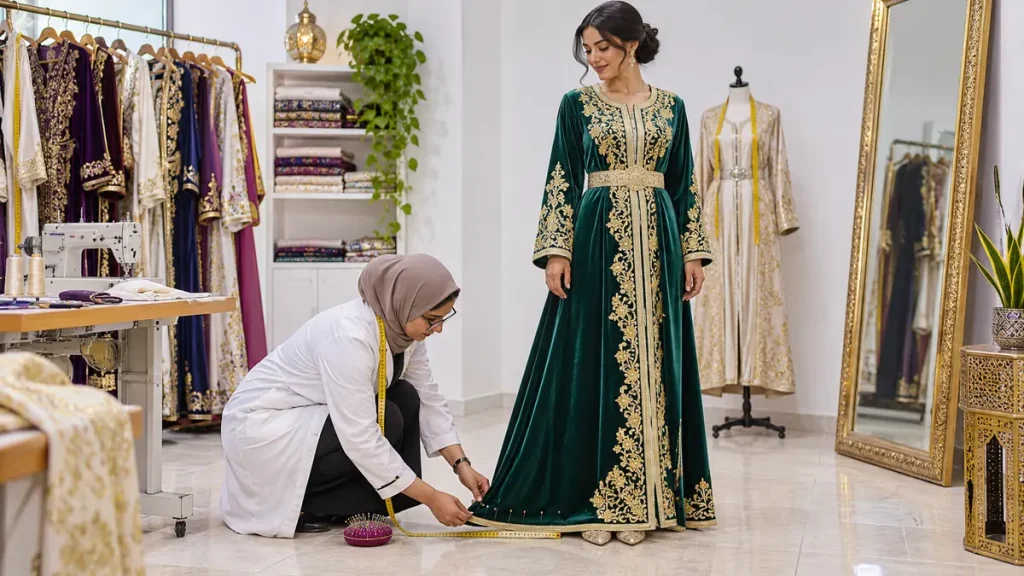
A Moroccan caftan can often be adjusted, but decorative construction makes some changes more complex than ordinary dress alterations. Sfifa, aakad, embroidery, lining and motif placement may cross the exact area that needs work.
The safest approach is to evaluate the garment before anything is cut. A reversible pin fitting should come before a permanent seam.
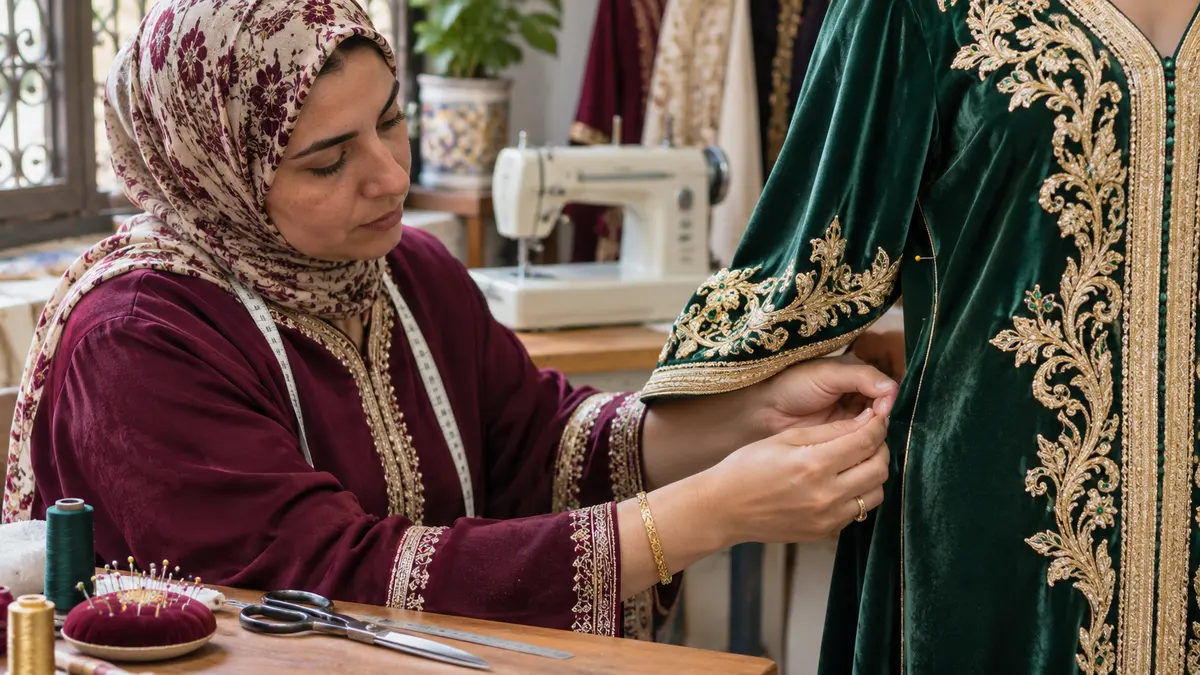
What a tailor evaluates first
The tailor checks seam allowance, lining, shoulder construction, embroidery placement and the relationship between belt and waist. The fabric must tolerate unpicking without leaving obvious marks. Bring the intended shoes and belt because they affect both length and proportion.
Shortening the hem
A plain hem is usually the most straightforward adjustment. Difficulty increases when embroidery, a woven border or sfifa runs close to the bottom. The tailor may need to detach and reposition decoration instead of cutting through it.
Adjusting the sides
Taking in side seams can refine volume when enough seam allowance and a suitable motif layout exist. The change should preserve room for sitting and walking. A caftan should not be fitted like a narrow evening dress.
Changing sleeve length
Sleeves can sometimes be shortened from the cuff or shoulder. Cuff embroidery often makes the shoulder the cleaner option, but shoulder work affects the armhole. Both sleeves must remain balanced.
Shoulder and neckline work
Small shoulder corrections can improve the fall of the entire garment. Major neckline changes are harder because sfifa, aakad and embroidery define that area. Cutting a new neckline may require rebuilding trim and closures.
Moving belt loops or adjusting belt fit
Belt loops can often be repositioned when they sit too high or low. The belt itself may be adjustable depending on its closure. Do not tighten it simply to compensate for poor shoulder or side fit.
When embroidery limits the change
Needle holes, metallic thread and beading may leave marks when removed. Dense motifs can conceal seams that cannot be opened without dismantling a large area. Ask what will be disturbed and whether the original decoration can be reinstated.
Changes that may not be sensible
A dramatic size reduction, major silhouette change or attempt to add missing length can cost more than choosing another garment. Fabric additions are difficult to hide when colour and weave must match.
Prepare for two fittings
The first fitting establishes pinned changes. The second checks balance after sewing and before final finishing. Move, sit and wear the belt during both; an alteration must work in motion as well as on the hanger.
Final Thoughts
Many hems, sleeves, side seams and belt positions can be adjusted, but embroidery turns every alteration into a design decision.
Choose a tailor familiar with Moroccan garments, request a clear plan and avoid cutting until the effect on decoration and proportion is understood.