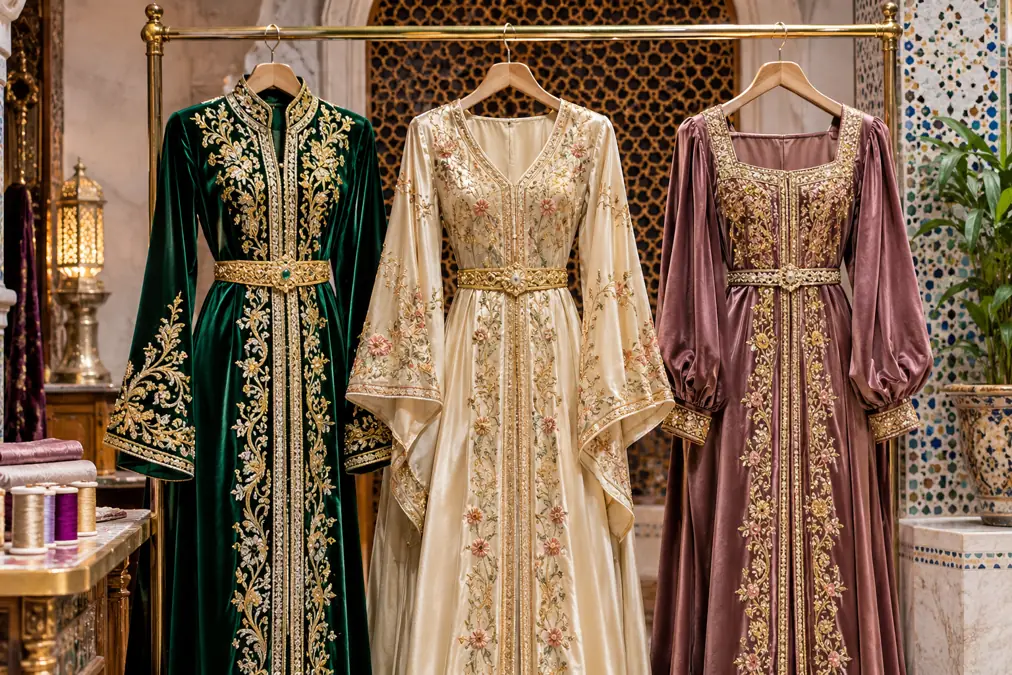
Necklines and sleeves shape the part of a caftan seen most often in conversation and photographs. They frame the face, control movement and determine how easily jewelry can be added.
Choosing them is not about correcting a body. It is about deciding what visual line and level of comfort you want the garment to create.
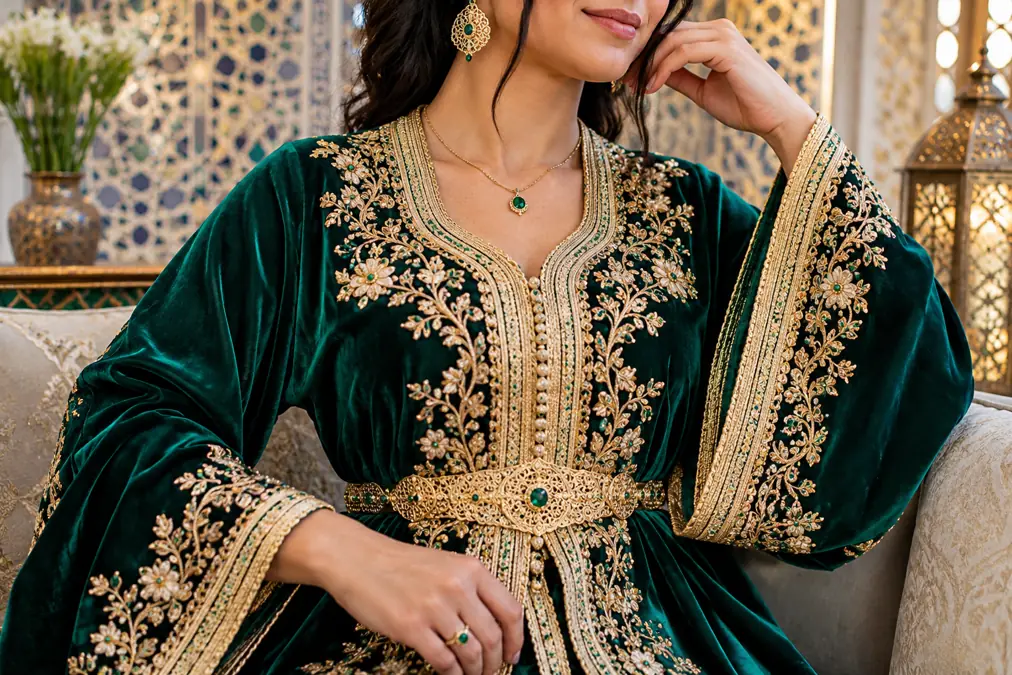
The classic V-shaped neckline
A V-shaped opening creates a vertical line that can make dense embroidery feel lighter. Its depth may range from modest and structured to more open, so photographs should be checked carefully.
Sfifa and aakad often strengthen the centre line. If you plan to wear a necklace, confirm that it sits inside the open space rather than colliding with the trim.
Rounded and softly curved necklines
A rounded neckline can feel calm and balanced, especially when the embroidery follows the curve cleanly. It works well with statement earrings or a short necklace.
The curve should lie flat. Rippling around the neck may indicate that trim, fabric and cut are pulling against one another.
Higher necklines
A high neckline creates a regal, contained silhouette and can be useful when the embroidery itself is the main ornament. It may also suit cooler venues.
Check comfort while sitting and turning the head. A heavily decorated high collar should not rub the neck or restrict movement.
Straight and square influences
Some contemporary caftans use straighter neckline geometry. This can create a clean architectural frame for the shoulders and jewelry.
Because corners attract attention, finishing must be precise. Sfifa should turn cleanly without bunching.
Wide flowing sleeves
Wide sleeves give a caftan movement and ceremony. They are particularly effective when their borders carry embroidery that becomes visible as the hands move.
Length is crucial. Sleeves that extend too far can interfere with dining and greetings. Test them during normal actions, not only while standing still.
Narrower sleeves
A narrower sleeve produces a streamlined outline and may be easier for long events. It can still feel traditional when cuffs, sfifa and embroidery are thoughtfully placed.
There must be enough room at the elbow and upper arm. A visually slim sleeve that restricts bending will quickly become uncomfortable.
Flared and layered sleeves
Flared cuffs or layered transparent sleeves create emphasis away from the shoulder. They can add drama without making the full garment heavy.
Delicate layers require careful handling around jewelry and bags. Check whether the edges are finished to resist snagging.
Match sleeves to the occasion
For hosting, dining or frequent movement, controlled sleeve width is practical. For a ceremonial entrance or formal photographs, a wider sleeve may contribute more presence.
The best design supports the activities of the event. Style and function do not need to be opposites.
Alteration questions
Sleeves and necklines can sometimes be adjusted, but embroidery may limit the available seam allowance or cutting line. Ask a tailor before purchasing with an alteration in mind.
Our caftan alteration guide explains why some changes are simple and others can disturb the design.
Final Thoughts
A neckline frames the face; a sleeve frames movement. Choose both with the complete outfit and real event in mind.
Look for clean finishing, comfortable range of motion and enough visual space for the embroidery and accessories to work together.