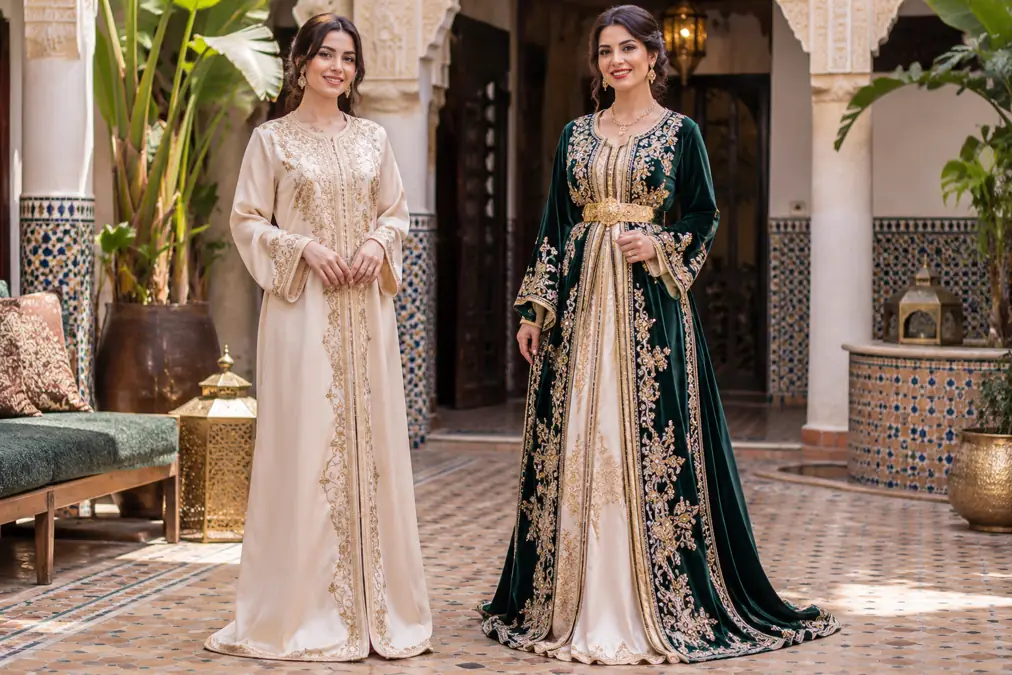
The words caftan and takchita are sometimes used as if they describe the same garment. They belong to the same Moroccan dress tradition, but they are not interchangeable. The difference is easiest to understand by looking at construction rather than decoration.
A garment can be richly embroidered and still be a caftan, while a restrained two-layer design can still be a takchita. Colour, price and the amount of ornament do not decide the category. The structure of the outfit does.
The clearest difference: one layer or two
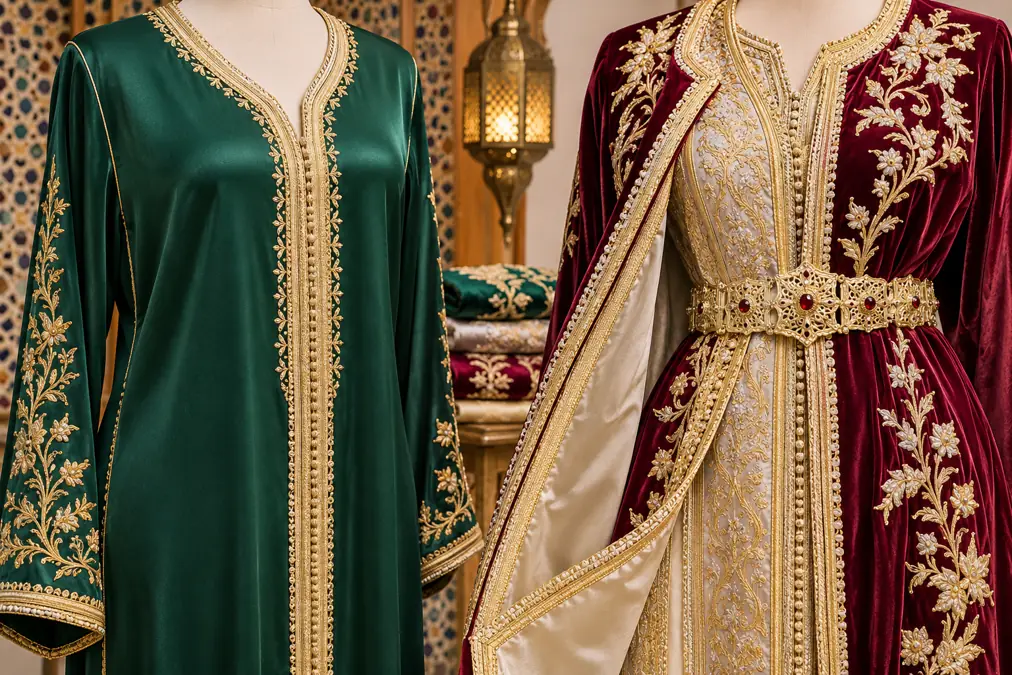
A Moroccan caftan is normally a single principal garment. It may be lined, embellished or worn with a belt, but its visible construction is based on one dress.
A takchita is built as a coordinated two-piece ensemble. The inner dress, often called the tahtiya, creates the base. A second, more open layer is worn over it. The outer layer can reveal the colour, texture or embroidery beneath as the wearer moves.
This distinction matters when shopping online. Product photographs taken only from the front can hide the second layer, so check the side, neckline and open front before relying on the title alone.
How the silhouette changes
A single-layer caftan often creates a clean, continuous line from shoulder to hem. Its visual rhythm comes from the neckline, sfifa, embroidery, sleeves and belt.
A takchita has more architectural depth. The open outer piece frames the inner dress and can produce contrasting vertical lines. Because two fabrics move together, it may feel fuller and more ceremonial even when the embroidery is subtle.
The role of the belt
Both garments can be worn with a traditional belt, so the presence of a belt does not turn a caftan into a takchita. On a caftan, the belt shapes the single garment and gathers its volume at the waist.
On a takchita, it also keeps the two layers visually aligned. A very ornate belt may become the centre of the outfit, while a narrow coordinated belt lets the layered construction remain the main feature.
Which one suits a wedding?
There is no rule that says a wedding guest must wear one and not the other. A refined caftan can be perfectly appropriate, especially for a daytime celebration, a smaller family event or a guest who prefers ease of movement.
A takchita is often chosen when the occasion calls for greater ceremony or when the wearer wants a layered, formal presence. The decision should also reflect the venue, season and your role at the celebration. Our Moroccan wedding guest guide explores those practical questions in more detail.
Comfort and seasonal considerations
Two layers can add weight and warmth. That may be welcome in a cool evening venue but less comfortable at a warm summer event. Fabric choice can change the experience significantly: a light inner layer and fluid outer piece feel very different from two structured, heavily embellished fabrics.
A single caftan is not automatically lightweight either. Velvet, dense lining and extensive beadwork can make one layer feel heavier than a light takchita. Always look beyond the garment name and consider the actual material and decoration.
How to identify each garment in photographs
Look first at the front opening. If a second coordinated dress is clearly visible beneath an open outer layer, you are probably looking at a takchita. Check the hem and sleeves too, where layered edges are often easier to see.
If every visible section belongs to one continuous garment, it is likely a caftan. Ask the seller what pieces are included when photographs are unclear. A reliable listing should state whether the outfit contains one dress, two layers and a belt.
A useful buying question
Instead of asking only “Is this a caftan or a takchita?”, ask how the outfit is constructed and what arrives in the package. That question gives you information you can use: number of pieces, weight, ease of dressing, styling options and alteration complexity.
The correct name matters culturally, but clear construction details matter just as much when you are choosing a garment you intend to wear.
Final Thoughts
A caftan is generally a single principal garment; a takchita is a coordinated two-layer ensemble. Embroidery, colour and formality can vary widely in both.
Once that structural difference is clear, the better choice becomes personal. Select the piece whose weight, movement, styling and level of ceremony suit your occasion rather than assuming that one category is always more elegant than the other.